Challenge
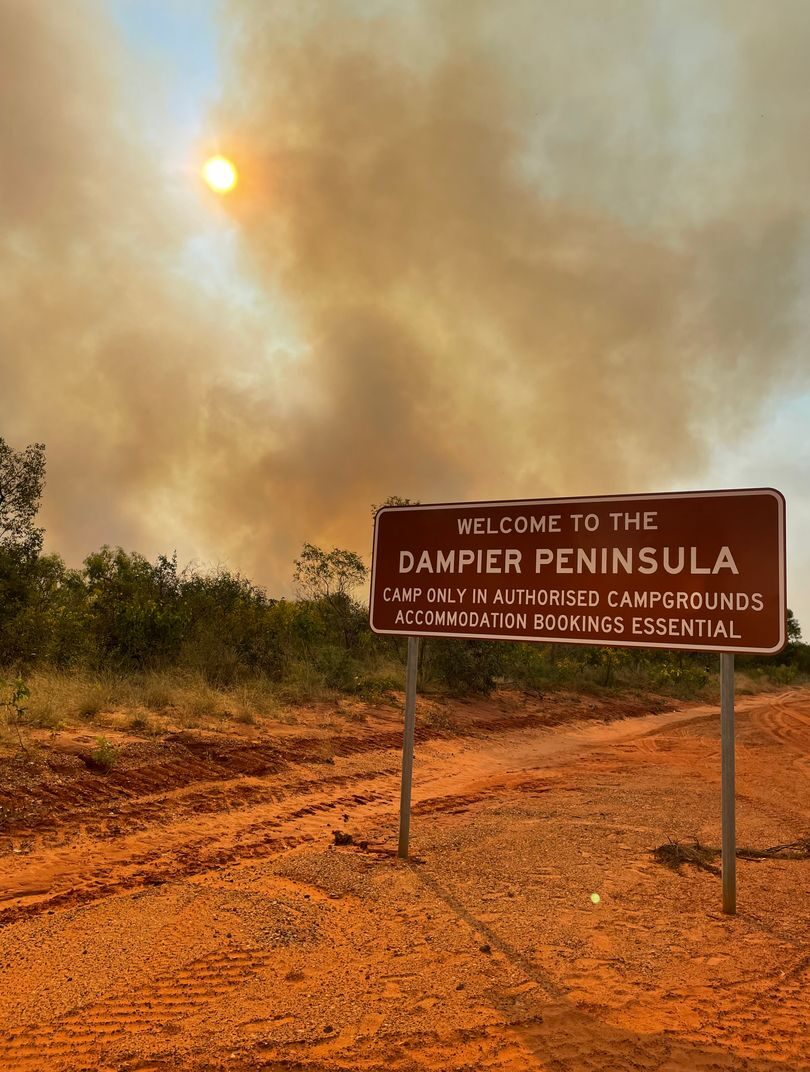
Each dry season across the Dampier Peninsula, uncontrolled and destructive wildfires pose a significant threat to cultural sites, biodiversity, and pastoral infrastructure. As a result, the region’s ecological condition has shifted markedly, with fewer areas remaining unburnt across consecutive years, altering plant diversity and disrupting habitat structure for native fauna.
The increasing extent of large-scale fires also leaves threatened species, such as the bilby, more exposed and vulnerable to predation by feral cats.
Solution
The Dampier Peninsula Fire Working Group addresses the challenge of managing fire regimes across the Dampier Peninsula. We facilitate two core workshops each year (strategic planning and end-of-season debrief) and maintain shared data on burn plans, fire scars and risk areas.
Traditional Owners lead mosaic burning approaches; agencies and pastoralists align ground and aerial operations. Spatial mapping and analysis help target edge detection and segmentation (EDS) patterning and identify Landsat-derived hotspots; a dedicated communications plan reduces accidental and arson ignitions and supports right-way fire messaging with local communities and pastoral stations.
Impact
Since 2016, the Group has delivered measurable improvements in fire regimes, with a clear shift toward cooler, earlier dry-season burns, improved fire dispersion, and an increase in areas remaining long-unburnt.
This has created a more complex mosaic of habitats, supporting biodiversity across a range of time-since-fire stages. Beyond ecological outcomes, the Working Group has significantly strengthened ranger capability and fostered meaningful connections across the region, uniting diverse stakeholders around a shared purpose.
This collaborative approach has been recognised nationally, including receiving the 2025 Landcare Award for First Nations–led initiatives.
Outcome
Looking ahead, the Group is well positioned to continue strengthening fire management across the Dampier Peninsula, building on a proven shift toward cooler, earlier dry-season burns, improved fire dispersion, and increasing areas left long-unburnt. This will further enhance the development of a diverse habitat mosaic, supporting biodiversity across a range of time-since-fire stages.
Into the future, the Working Group will continue to invest in ranger capability, strengthen cross-tenure collaboration, and deepen connections across the region under a shared vision for fire management.
With growing recognition, the group is set to expand its impact through stronger partnerships, improved knowledge sharing, and continued leadership in right-way fire management.