Rangelands are the vast open landscapes that cover most of outback Australia — stretching from tropical savannas and ancient deserts to rugged coastlines, woodlands and wetlands.
They are wild, expansive and alive.
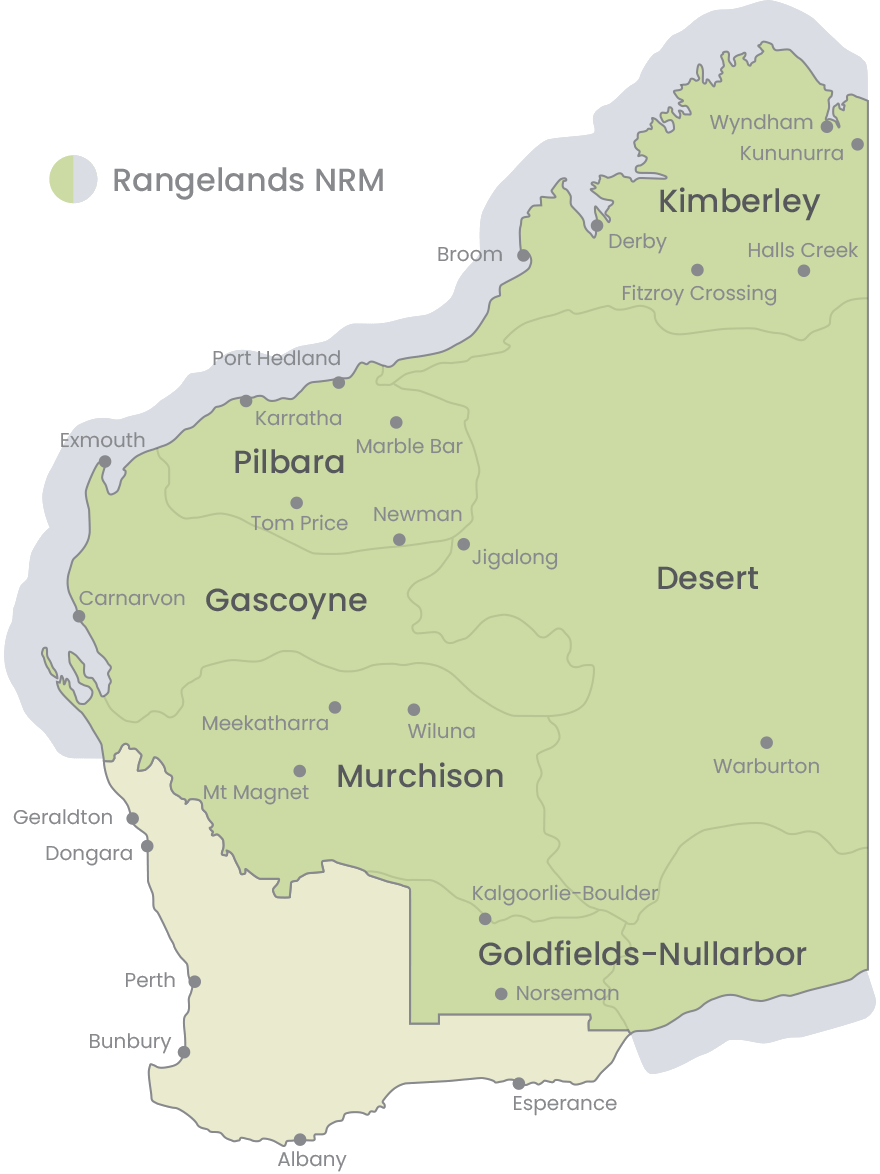
In Western Australia, the rangelands cover approximately 227 million hectares, making up approximately 87% of the state, spanning the Kimberley, Pilbara, Gascoyne, Murchison, Western Desert and Goldfields-Nullarbor regions.
To put that in perspective, it is an area larger than most countries.
These landscapes are home to thousands of plant and animal species, many found nowhere else in the world. They filter and store water, regulate our climate, support carbon storage and underpin the natural systems that keep our environment healthy and functioning.
They are also the backbone of WA’s pastoral and agricultural industries, supporting cattle stations, farming communities and regional economies that stretch across the state.
Put simply, the rangelands are the heart of WA’s outback. They support life, livelihoods and culture on an extraordinary scale.
UNESCO Word Heritage sites
Shark Bay
Ningaloo Coast
Purnululu National Park (Bungle Bungle Range)
Murujuga, (Burrup Peninsular)
Ramsar sites
Roebuck Bay
80 Mile Beach
Ord River Floodplain
Lake Argyle
Lake Kununurra
Priority Place
Yampi Sounds and surrounds
493 Natural Resource Assets including the spectacular natural sites of
Karijini National Park
Great Western Woodlands
Dampier Archipelago and surrounds
Fitzroy River