Challenge
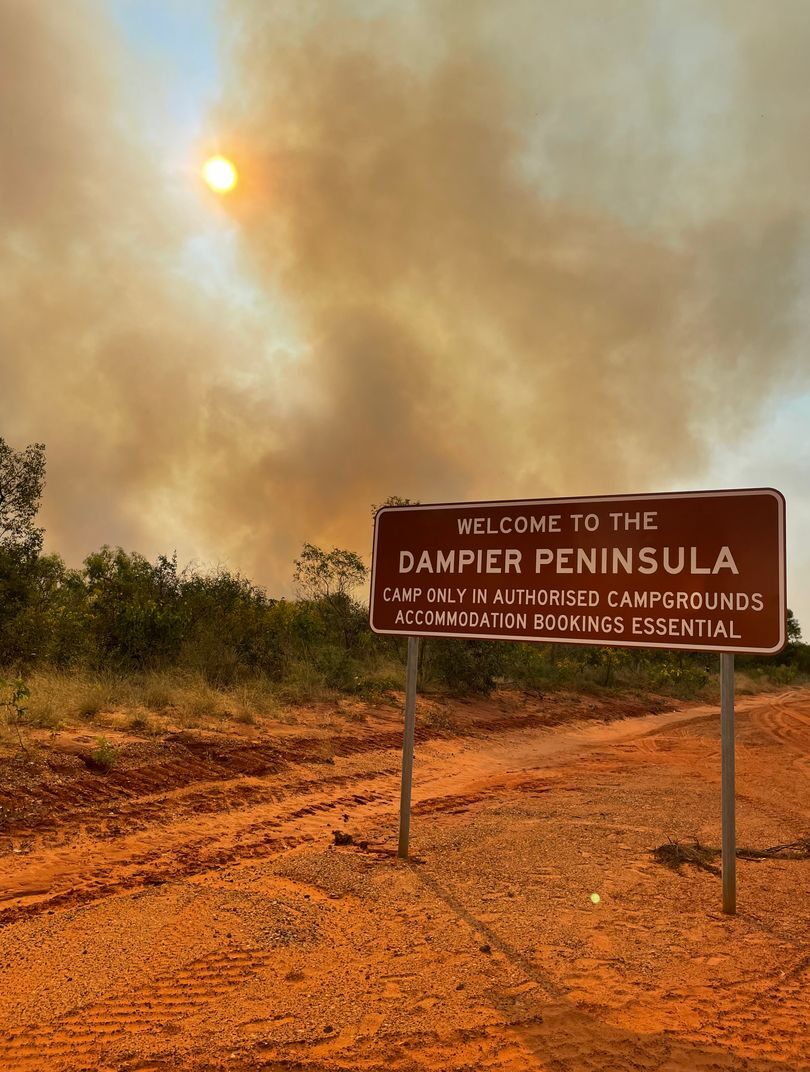
Every dry season, large, hot uncontrolled wildfires on the Dampier Peninsula threaten cultural sites, biodiversity and pastoral infrastructure. Too few areas remain long-unburnt, and late-season ignitions can spread rapidly across country. The project responds to the need for coordinated fire management, integrating traditional ecological knowledge with contemporary land management practices to reduce risk and enhance landscape resilience.
Solution
The Dampier Peninsula Fire Working Group addresses the challenge of managing fire regimes across the Dampier Peninsula. We facilitate two core workshops each year (strategic planning and end-of-season debrief) and maintain shared data on burn plans, fire scars and risk areas. Traditional Owners lead mosaic burning approaches; agencies and pastoralists align ground and aerial operations. Spatial mapping and analysis help target edge detection and segmentation (EDS) patterning and identify Landsat-derived hotspots; a dedicated communications plan reduces accidental and arson ignitions and supports right-way fire messaging with local communities and pastoral stations.
Impact
Since 2016, the Group has measurably improved fire regimes: cooler, earlier-season burns, better dispersion and increasing areas left long-unburnt to create a mosaic of habitats with varying timeline since fire impact. In 2025, despite high ignition pressure, stakeholders reported stronger ranger capacity, clearer data sharing and quicker cross-tenure responses. Community outreach continues to build local awareness and reduce unplanned fires.
Outcome
The Dampier Peninsula Fire Working Group has established a sustainable, community-led model for landscape fire management that integrates Traditional Ecological Knowledge with modern spatial data tools. The partnership between Traditional Owners, agencies, and pastoralists has created a lasting governance structure that continues to improve fire outcomes season after season — protecting cultural heritage, biodiversity, and pastoral assets across one of Australia’s most ecologically significant coastal landscapes.